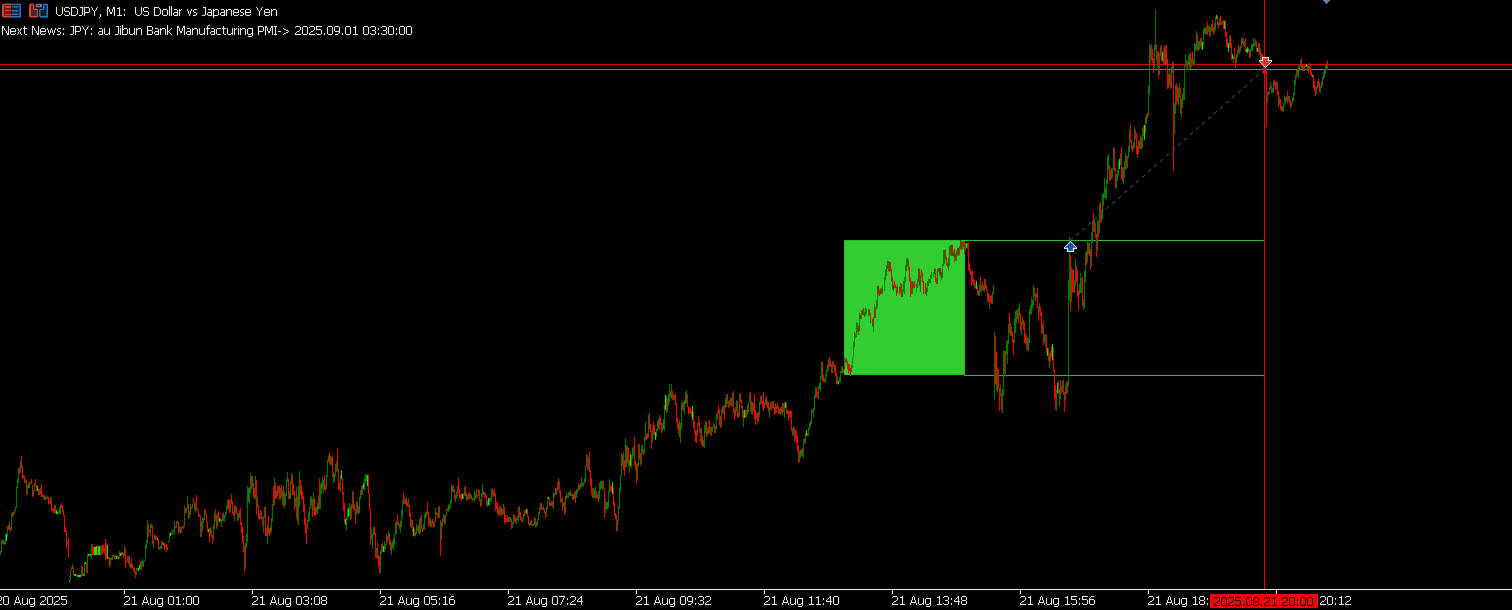
Expert Advisor Details
TensorBorn AI
1.0.0
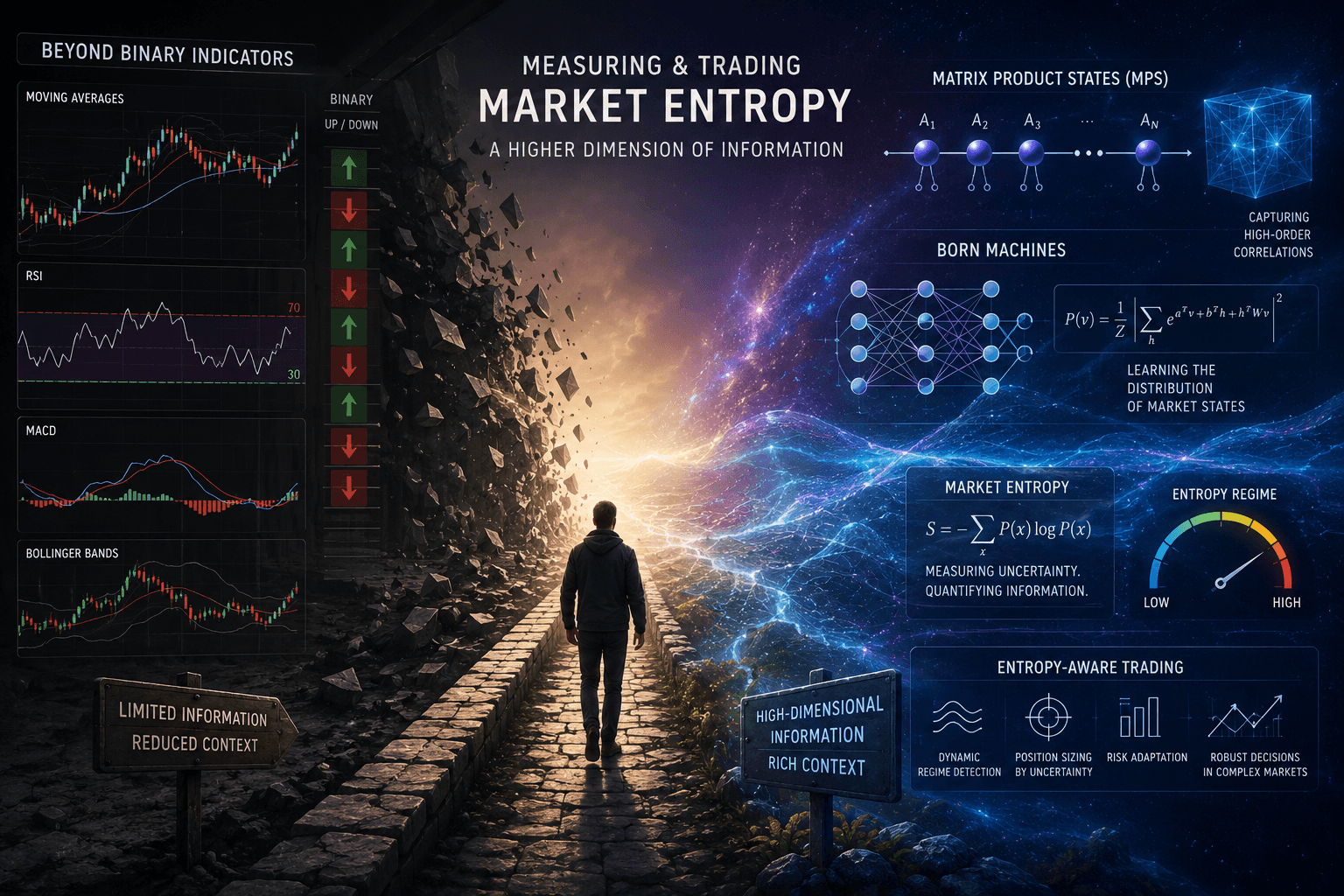
I’ve been spending a lot of time thinking about how trading has changed.
Most of what moves markets today isn’t manual anymore—it’s automated systems, models, and code running quietly in the background. Once you see how modern algorithmic trading actually works, it’s hard to unsee it. The retail landscape remains heavily focused on simple, lag-prone technical indicators like moving averages or oscillators. Yet, behind the institutional curtain, the game has evolved. Markets are not deterministic machines governed by neat, linear formulas; they are highly chaotic, non-stationary, and adversarial systems of collective human and machine psychology.
To capture alpha where traditional methodologies fail, we must move past deterministic point-estimates. Shifting your perspective from rigid technical rules to probabilistic entropy is a powerful evolution. Once you see market data through the lens of continuous probability distributions, you begin to understand what a truly robust trading framework looks like.
The Mirage of Certainty in Modern Forex Markets
The prevailing paradigm of applying deterministic machine learning for algorithmic trading is fundamentally flawed, particularly in high-volume, liquid Foreign Exchange markets. Traditional systems look at past price action, apply a series of lagging indicators, and force a binary decision: buy or sell. When developers attempt to upgrade these rules with standard machine learning—such as deep neural networks or gradient-boosted decision trees—they frequently replicate the exact same conceptual error. They assume there exists a fixed, learnable deterministic mapping between past observations and future price states.
However, the global currency market operates as a continuous probabilistic field. Noise from micro-structural adjustments, sudden liquidity shifts across institutional books, and macroeconomic events constantly warp the structural parameters of the market. When a classical neural network is trained to predict the exact price of a currency pair at , it inevitably overfits to historical noise trajectories. It mistakes transient patterns for permanent laws, resulting in catastrophic model degradation when faced with live, unseen market regimes.
To survive in this environment, a system must embrace uncertainty natively. Instead of asking a model to predict a singular, deterministic future outcome, the framework should evaluate the continuous evolution of the underlying market state, capturing the fluid density of price probabilities before any single tick is executed.
The Quantum-Finance Isomorphism
To model this uncertainty without falling into the overfitting traps of standard deep learning, quant researchers have drawn inspiration from quantum machine learning in finance. In quantum mechanics, the exact state of a physical system is treated as unknowable until a physical measurement occurs. Instead of predicting individual particle paths, physicists calculate the evolution of a wave-function, which describes the probability density of all possible states.
This provides a powerful mathematical isomorphism for financial time-series. If we define a multi-pair currency market—such as EUR/USD, GBP/USD, and USD/CAD—over a given lookback window as a collective state vector in a high-dimensional Hilbert space, the market exists in a continuous superposition of potential regimes (trending, mean-reverting, volatile, or stagnant). The actual executed price at the top of the order book acts as an "observable" operator. When a trade occurs, the market's wave-function "collapses" into a measurable, historical tick.
Rather than attempting to predict the exact tick, our objective is to model the evolution of the underlying wave-function . Under the classical formulation of the Born Rule, the probability of finding a quantum system in a specific state is proportional to the square of its wave-function amplitude:
When adapted for quantitative trading, this allows us to map continuous features directly to probability amplitudes, generating a mathematically rigorous, self-normalized probability distribution of forward returns rather than a pseudo-probabilistic "softmax" confidence score.
The Architecture of Probability: Tensor Network Born Machines
Deploying quantum-inspired systems on classical computers requires high computational efficiency. In institutional research, this is accomplished via tensor networks. Specifically, we utilize a framework known as the Tensor Network Born Machine (TNBM), parameterized via Matrix Product States (MPS).
In a standard neural network, modeling the joint probability distribution of multiple currency symbols across several lookback intervals leads to an exponential explosion in parameter space—a manifestation of the curse of dimensionality. For instance, analyzing a 3-pair forex universe over a rolling series of feature matrices quickly exceeds the parameter handling capacity of local execution models.
A Tensor Network Born Machine resolves this by compressing the high-dimensional Hilbert space into a linear chain of interconnected tensor cores. By controlling the internal "bond dimension" () of the Matrix Product State, the system filters out high-frequency noise and irrelevant features while retaining the essential mathematical correlations—the "entanglement"—between different currency pairs and temporal intervals.
Mathematically, continuous forex features (such as log returns and volatility metrics) are mapped into local qubit states via a quantum feature map:
These local states are then contracted into the Matrix Product State to reconstruct the joint density matrix of the market. The model is trained not by minimizing standard mean squared error, but by minimizing a hybrid loss function that combines binary cross-entropy with a quantum-kernel Maximum Mean Discrepancy (MMD) term in a Reproducing Kernel Hilbert Space (RKHS). This trains the model to match the complete probabilistic *shape* of empirical market returns rather than overfitting to specific historical paths.
Deploying Quantum-Ready Models inside MetaTrader 5
For an advanced algorithmic framework, theoretical elegance is useless without low-latency execution. Historically, running sophisticated tensor networks required building custom, lag-prone API bridges to external Python environments. This latency is highly destructive in live environments where a delay of even 50 milliseconds can turn a profitable entry into a slippage-driven loss.
The solution lies in the native integration of ONNX trading models MetaTrader 5. By exporting the fully trained Tensor Network Born Machine into the Open Neural Network Exchange (ONNX) format, the entire computational graph can be compiled directly into MQL5 expert advisors. This allows the MetaTrader 5 runtime engine to execute model inferences locally on the user's hardware via highly optimized, native C++ runtimes.
In practice, the system structures a highly efficient pipeline:
- Feature Extraction: The EA captures real-time tick data across three highly liquid symbols, transforming them into a 12-dimensional feature matrix.
- Normalization: Raw inputs (such as rolling log returns and ATR ratios) are min-max normalized over a rolling 100-bar window and clipped strictly to to match the input space of the local quantum feature maps.
- Inference: The local model executes via the built-in MQL5
OnnxRunfunction, outputting a 2-dimensional vector containing the buy probability () and the real-time quantum entropy.
┌─────────────────────────────────────────────────────────────────┐
│                 TENSORBORN LOCAL INFERENCE PIPELINE             │
├─────────────────────────────────────────────────────────────────┤
│ Multi-Symbol Forex Stream (USDCAD, EURUSD, GBPUSD)              │
│               │                                                 │
│               ▼                                                 │
│ Feature Pipeline → 12 Normalized Log & Volatility Inputs        │
│               │                                                 │
│               ▼                                                 │
│ Native MQL5 ONNX Engine (OnnxRun)                               │
│               │                                                 │
│               ▼                                                 │
│ Probabilistic Outputs → [Buy Probability (p_buy) , Entropy]     │
└─────────────────────────────────────────────────────────────────┘
Measuring Chaos: The Power of Quantum Decoherence Exits
Perhaps the most fascinating aspect of this probabilistic architecture is not how it identifies trade setups, but how it recognizes when the statistical edge has dissolved. Most retail ai forex trading bot strategies fail because they force trades into highly chaotic, low-liquidity environments. They lack an internal gauge for market randomness.
The Tensor Network Born Machine natively resolves this by calculating the Renyi entropy (order 2) of the output density matrix :
This entropy serves as a direct mathematical proxy for model uncertainty. When the market is in a highly structured state—such as a clean, high-liquidity session trend—the entropy remains low, indicating that the model has high conviction in the generated probability field. However, when the market enters a highly chaotic or highly manipulated state, the density matrix undergoes what we refer to internally as *quantum decoherence*. The entropy spikes toward its theoretical maximum.
When this decoherence threshold is breached, the execution logic takes immediate, autonomous action. Instead of chasing a trade into the noise, the system halts new entries and can proactively trigger a decoherence exit on open positions. It is a purely mathematical, emotion-free approach to sitting on your hands and preserving capital during high-risk market conditions.
Contextual and Regime-Aware Execution
Even the most sophisticated quantum-inspired model requires institutional-grade risk parameters to thrive in the real world. A mathematical edge must be paired with strict contextual filters. A robust implementation coordinates several layers of environmental defense:
| Execution Parameter | Operational Role | Strategic Rationale |
|---|---|---|
| Session Overlap Filters | Restricts entries to high-volume hours | Ensures model inferences operate within deep, institutional liquidity windows (London and New York overlap). |
| Quantum Decoherence Cap | Monitors real-time Renyi entropy | Halts trading and exits open positions during structural regime shifts or high-chaos news shocks. |
| Dynamic ATR Sizing | Adjusts trade sizing based on volatility | Maintains a constant dollar-at-risk, dynamically contracting lot sizes during high market expansion. |
| S/R Cluster Detection | Calculates support and resistance zones | Enforces geographic trade targets, placing volatility-aware stops and take-profits outside of structural noise. |
By pairing probabilistic predictions with strict execution filters, the framework adapts dynamically to changing volatility regimes instead of trying to fight them. It doesn't rely on perfect prediction accuracy; it relies on superior trade selection, dynamic risk scaling, and structured capital preservation.
Conclusion: The Paradigm Shift
The future of currency trading does not belong to the static indicators of the past, nor does it belong to massive, overfitted deep learning models that treat financial data as a simple deterministic equation. Shifting your perspective from rigid technical rules to probabilistic entropy is a powerful evolution.
By leveraging quantum-inspired Tensor Network Born Machines compiled natively via ONNX into MetaTrader 5, advanced systems are bridging the gap between theoretical quantum mechanics and low-latency algorithmic execution. While the proprietary details of these underlying tensor models remain confidential, the philosophical lesson is clear: once you see market data through the lens of continuous probability fields, it is impossible to return to the simple, deterministic rules of the past.
Works Cited / References
1. Investopedia. Algorithmic Trading: Definition, How It Works, and Strategies. Link
2. Northhaven Analytics. AI Trading: The Definitive Guide to Automated Trading Bots. Link
3. Frontiers in Artificial Intelligence. Artificial Intelligence in Financial Market Prediction. Link
4. arXiv. Generative Modeling with Tensor Networks and Born Machines. Link
5. Axiory. How to Trade Forex with AI and Machine Learning. Link
6. Wikipedia. Tensor Network: Matrix Product States and Applications. Link
7. MQL5 Community. Using ONNX Models in MetaTrader 5 Expert Advisors. Link
8. MQL5 Documentation. Native ONNX Support and Mathematical Matrix Operations. Link
9. Auron Automations. AI Trading Bots & Forex Robots: The 2026 Landscape. Link