Expert Advisor Details
QuantumBorn
2.0.1

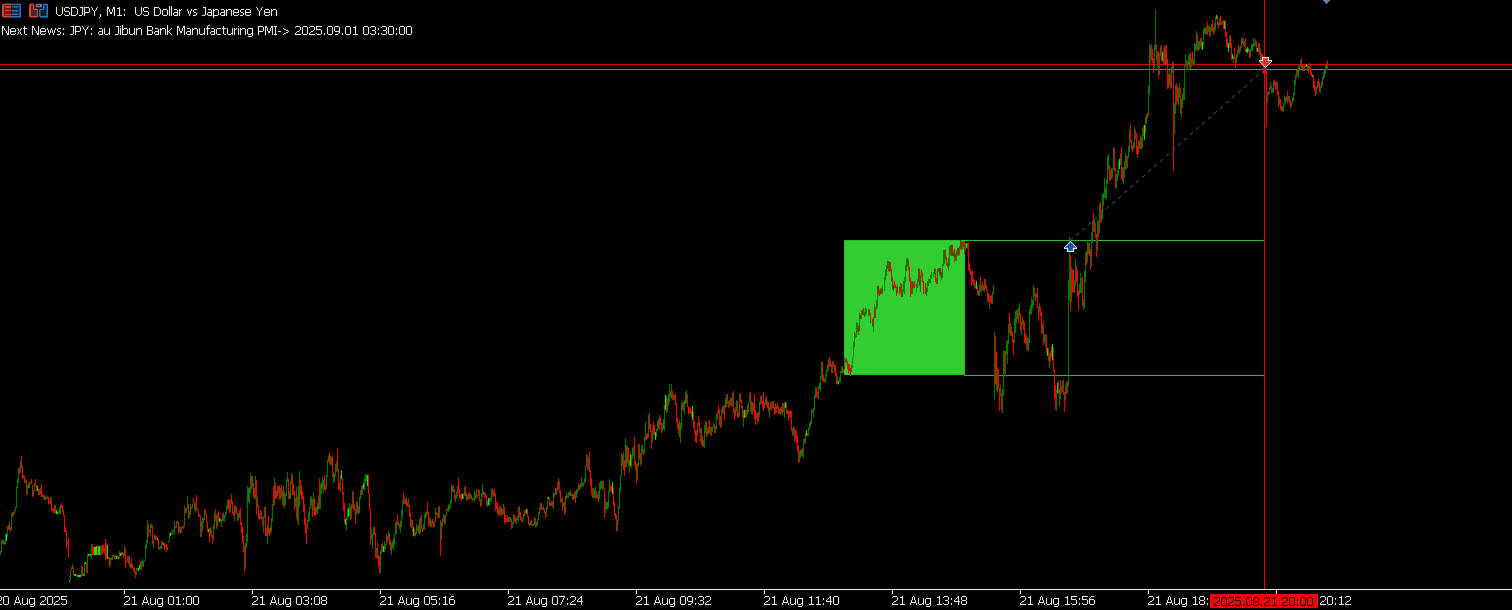
Backtest and forward test resuts for QuantumBorn
I've been spending a lot of time thinking about how we build trading systems that actually survive real market conditions.
Most ONNX trading models I see deployed in retail environments are structurally fragile. They're trained on clean historical data, optimized for backtest performance, and deployed with rigid execution logic that assumes markets behave predictably. The moment volatility spikes, liquidity dries up, or a central bank makes an unexpected announcement, these systems collapse.
The issue isn't just about having a sophisticated model—it's about building an architectural framework that treats uncertainty as a first-class citizen. Once you see how quantum-inspired geometric phase classifiers handle probabilistic state evolution rather than deterministic predictions, it becomes clear why traditional systems fail under stress.
The Structural Problem with Deterministic Execution
Consider a typical machine learning-based Expert Advisor. It takes in technical features—perhaps RSI, MACD, ATR, and a few moving averages—feeds them into a trained neural network, and outputs a signal: buy, sell, or hold. The execution layer then acts on this signal mechanically, placing trades with fixed stop-losses and take-profits calculated from static ATR multiples.
This approach makes a dangerous assumption: that the model's output represents a stable, actionable truth about the market's future state. In reality, financial markets exist in a continuous state of probabilistic flux. What the model should be communicating isn't a discrete decision, but a probability distribution over possible future states—and critically, a measure of its own uncertainty.
The Quantum Geometric Phase Classifier (QGPC) architecture addresses this by modeling market states as evolving wave functions rather than fixed predictions. Instead of forcing a binary classification at inference time, the system outputs a continuous probability field that naturally encodes both directional bias and epistemic uncertainty.
Adiabatic Evolution: Trading the Probability Field, Not the Prediction
In quantum mechanics, an adiabatic process describes a system's evolution when external parameters change slowly enough that the system remains in its ground state. This concept translates directly to financial markets: during stable, liquid trading sessions, the market's underlying "state" evolves smoothly, and probabilistic models can track this evolution with high confidence.
The geometric phase—a phase shift that depends only on the path taken through parameter space, not the speed—provides a natural framework for understanding how market regimes shift. When the QGPC model computes features from multi-timeframe price data, it's effectively tracing a path through a high-dimensional feature space. The model's output probability isn't just a function of the current feature values, but of the geometric trajectory the market has taken to reach that state.
Mathematically, this is expressed through the model's treatment of normalized features as quantum state amplitudes:
where the probability of a bullish state is given by the Born rule:
This formulation ensures that probabilities are always properly normalized, and more importantly, that the model's confidence naturally degrades when the market enters chaotic, non-adiabatic regimes.
Feature Engineering for Probabilistic State Representation
The QuantumBorn EA implements a sophisticated feature pipeline that goes far beyond simple technical indicators. The system constructs a 12-dimensional normalized feature vector that captures multi-scale market dynamics:
- •
Log returns across multiple timeframes: M15, H1, and H4 returns capture momentum at different temporal scales
- •
Volatility ratios: ATR normalized by price level, capturing regime-dependent volatility clustering
- •
Support/Resistance proximity: Distance to detected S/R zones, encoded as normalized percentages
- •
Cross-pair correlation features: For currency pairs, relative strength against basket components
Critically, these features aren't just fed raw into the model. The pipeline implements a rolling min-max normalization scheme with a 500-bar warmup period, ensuring that features are consistently scaled to the interval required by the quantum feature map. This normalization is dynamic—it adapts to changing volatility regimes automatically, preventing the model from seeing out-of-distribution inputs during live execution.
ONNX Integration: Eliminating Latency Bottlenecks
One of the most common failure modes in production algorithmic trading systems is execution latency. Many retail traders attempt to integrate Python-based models by building REST API bridges or using socket connections between MetaTrader and external Python processes. This introduces 50-200ms of latency per inference call—an eternity in fast-moving markets.
The QuantumBorn architecture solves this by compiling the trained model directly into ONNX format and embedding it as a resource in the compiled EA. The MQL5 runtime loads the model into memory at initialization and executes inference calls via native OnnxRun functions with sub-millisecond latency:
// Model loading at initialization
g_model_handle = OnnxCreateFromBuffer(g_model_xauusd, ONNX_DEFAULT);

// Set input/output shapes
const long input_shape[] = {1, 12};
const long output_shape[] = {1, 1};
OnnxSetInputShape(g_model_handle, 0, input_shape);
OnnxSetOutputShape(g_model_handle, 0, output_shape);

// Real-time inference
float inputs[12];
float outputs[1];
if (OnnxRun(g_model_handle, ONNX_NO_CONVERSION, inputs, outputs))
{
    double prob = (double)outputs[0];
    // Execute trading logic based on probability
}
This architecture is genuinely portable. The compiled .ex5 file contains both the execution logic and the trained model weights, meaning you can deploy the EA to a VPS or prop firm server without managing external dependencies, Python environments, or network connections.
Multi-Symbol Resource Management: Symbol-Specific Models
Different financial instruments exhibit fundamentally different statistical properties. Gold (XAUUSD) behaves differently from EUR/USD, which behaves differently from US equity indices. Training a single universal model across all instruments typically results in a mediocre generalist that excels at nothing.
The QuantumBorn EA addresses this through a sophisticated resource management system that embeds multiple symbol-specific models directly into the compiled binary:
#resource "\\Models\\XAUUSD.onnx" as uchar g_model_xauusd[]
#resource "\\Models\\EURUSD.onnx" as uchar g_model_eurusd[]
#resource "\\Models\\US30.onnx" as uchar g_model_us30[]
#resource "\\Models\\US500.onnx" as uchar g_model_us500[]
#resource "\\Models\\GBPUSD.onnx" as uchar g_model_gbpusd[]
#resource "\\Models\\USDJPY.onnx" as uchar g_model_usdjpy[]
At runtime, the EA detects the current symbol and loads the appropriate model from the embedded resources. If no symbol-specific model is found, it falls back to a general-purpose model trained on XAUUSD. This design allows institutional-grade specialization while maintaining deployment simplicity.
The same architecture extends to feature selection indices. Each symbol has an associated configuration file specifying which subset of the 12 available features the model was trained on, embedded directly into the EA:
#resource "\\Files\\quantum_selected_features_XAUUSD.txt" as uchar g_features_xauusd[]
#resource "\\Files\\quantum_selected_features_EURUSD.txt" as uchar g_features_eurusd[]
// ... additional feature configs
Regime-Aware Risk Management: When Not to Trade
The most underappreciated aspect of professional trading systems isn't what they trade—it's what they refuse to trade. The QuantumBorn EA implements multiple layers of environmental awareness that prevent it from executing during unfavorable conditions:
Risk Filter | Implementation | Purpose |
|---|---|---|
News Filter | Economic calendar integration | Blocks trading 15 minutes before and after high-impact news events |
Daily Trade Limits | Configurable max trades, buys, and sells per day | Prevents overtrading and preserves capital during losing streaks |
Dynamic Exits | ADX and ATR-based regime detection | Adjusts profit targets and stops based on current market volatility |
Position Limits | Maximum concurrent positions | Controls portfolio concentration risk |
Perhaps most importantly, the system implements a Hurst exponent-based regime classifier that estimates whether the market is trending, mean-reverting, or in a random walk state. During periods of high entropy (random walk), the system reduces position sizing or exits entirely, recognizing that the probabilistic edge has temporarily vanished.
The HUD: Real-Time Probabilistic Visualization
One of the distinguishing features of the QuantumBorn architecture is its comprehensive on-chart display system. Rather than hiding the model's internal state, the EA renders real-time probability distributions, regime classifications, and risk metrics directly on the chart.
Traders can see:
- •
Current buy/sell probability (not just a binary signal)
- •
Model confidence and entropy metrics
- •
Active regime state (trending vs. mean-reverting)
- •
Daily trade count and remaining allocation
- •
News event status and countdown
- •
Trailing stop distances and profit targets
This transparency is intentional. Professional quantitative systems aren't black boxes—they're instrumented frameworks that provide continuous feedback about their internal state and confidence levels.
Verification and Licensing: Production-Grade Access Control
The QuantumBorn EA includes an optional license verification system that allows model creators to control access and distribution. This is particularly relevant for prop firms, signal providers, or developers distributing models commercially.
The verification layer operates through a simple API check at initialization and periodic validation during runtime. If the license is invalid or expired, the EA gracefully disables trading while preserving existing positions. This architecture allows for:
- •
Time-limited demo access
- •
Hardware-locked deployments
- •
Remote kill-switch capability
- •
Usage analytics and monitoring
Critically, the verification system is designed to fail safely—if the verification server is unreachable, the EA can be configured to continue trading for a grace period, preventing false positives from network issues.
What's Not Included: Proprietary Model Details
While this article provides a comprehensive architectural overview, several critical components remain proprietary:
- •
Training methodology: The specific loss functions, optimization algorithms, and data augmentation techniques used to train the quantum-inspired classifiers
- •
Feature selection process: The statistical methods used to determine which 12 features (from a larger candidate set) are selected for each symbol
- •
Hyperparameter optimization: The specific bond dimensions, learning rates, and regularization schemes used during model training
- •
Backtesting framework: The robust walk-forward validation system used to prevent overfitting and ensure out-of-sample performance
These details represent the core intellectual property of the system. What's presented here is the execution framework—the architectural decisions that allow a trained quantum-inspired model to operate reliably in production environments.
Conclusion: From Theory to Production
Building a production-grade quantum-inspired trading system requires more than just an interesting model architecture. It demands careful attention to execution latency, resource management, regime awareness, risk controls, and operational monitoring.
The QuantumBorn EA represents a specific architectural philosophy: that probabilistic models should output probability distributions, not forced decisions; that uncertainty should be measured and acted upon, not ignored; and that production systems should be instrumented, observable, and fail-safe.
Once you see how modern quantitative systems integrate theoretical advances with practical engineering constraints, it becomes difficult to return to the simplistic rule-based systems that still dominate retail algorithmic trading. The gap between institutional and retail trading infrastructure continues to widen—not because of access to better data or faster execution, but because of fundamentally different architectural approaches to uncertainty, risk, and automation.
Works Cited / References
1. MQL5 Community. How to use ONNX models in MQL5. Link
2. MQL5 Community. Mastering ONNX: The Game-Changer for MQL5 Traders. Link
3. arXiv. The geometric phase of stock trading. Link
4. arXiv. On Quantum Ambiguity and Potential Exponential Computational Speed-Ups to Solving Dynamic Asset Pricing Models. Link
5. MQL5 Community. Market Structure ONNX Expert Advisor. Link
6. MQL5 Community. Gold Logic ONNX - Dueling Neural Network Architecture. Link
7. MQL5 Community. Larry Williams XGBoost ONNX Expert Advisor. Link
8. MetaTrader 5. Working with machine learning models. Link
9. arXiv. Enhanced fill probability estimates in institutional algorithmic bond trading using quantum computers. Link